Make difficult access clear.
Show the approach through the surrounding systems before a known replacement. Keep the specialist’s explanation beside the approved maintenance instruction.
Request a demo
From a recording
to spatial guidance.
A recorded procedure becomes a spatial guide, connecting what the expert does to the part the next technician needs to work on.
Start with the recorded procedure.
The rotor and its surroundings stay in view as the recording resolves into points.
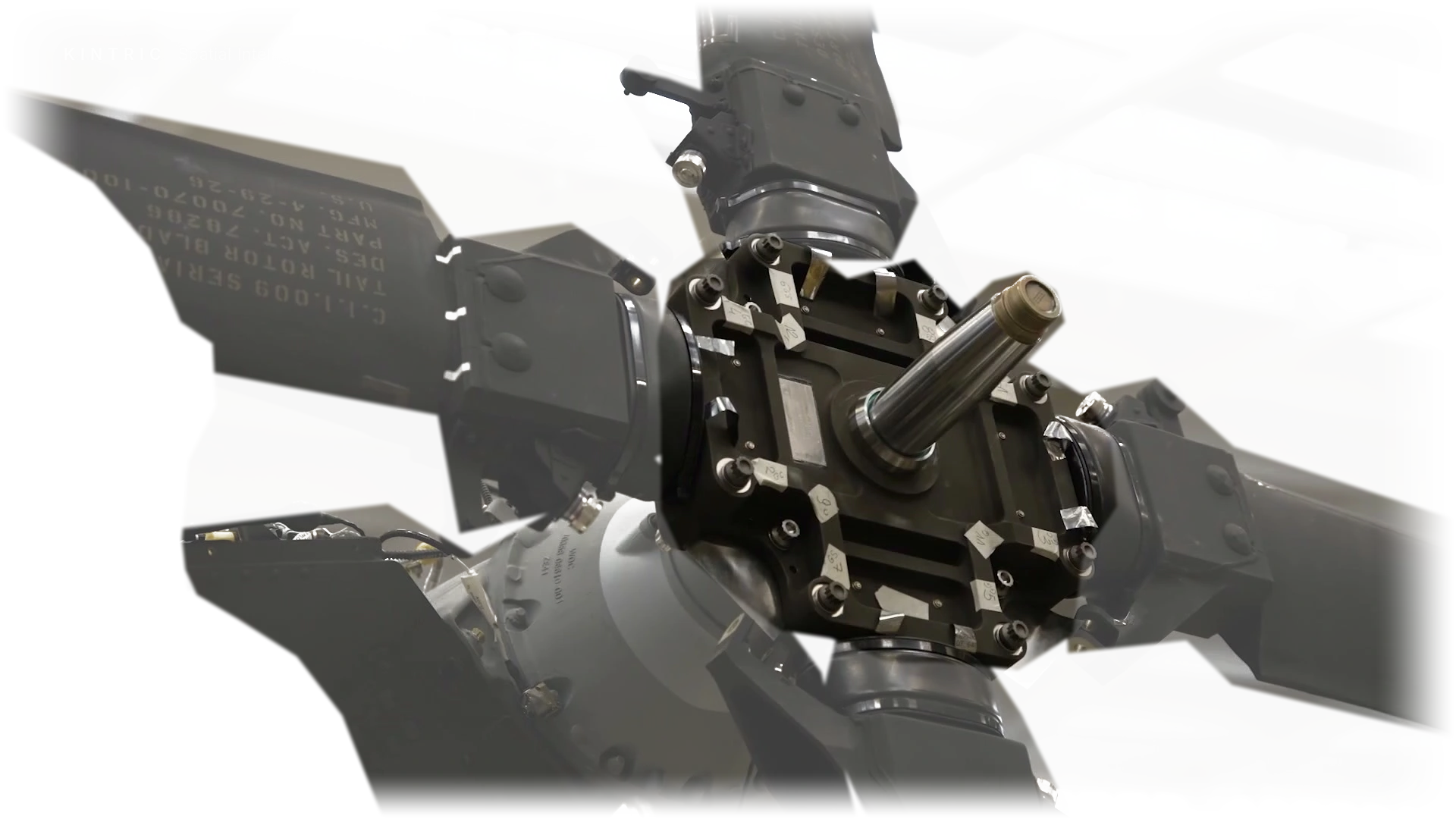
The job card identifies the component. The physical approach through nearby systems can still need a specialist’s explanation.
Show the component, mountings and movement together in the assembly.
Give another station the reviewed demonstration for its aircraft configuration.
Keep completed checks and open questions with the task for the next shift.
Choose a repeated task where access causes requests for help. Technical services defines the aircraft configuration and applicable maintenance references.
Give another technician the physical context behind the instruction. Evaluate interruptions and repeat support on the task, with aircraft release assessed separately.
Inspect the component, nearby systems and access route alongside the applicable maintenance data.
Relate the reviewed spatial explanation to the installed assembly. Keep the original demonstration for techniques that geometry alone cannot explain.
The incoming team sees completed checks and where work stopped. Inspection and release stay with the authorized maintenance organization.
Does this replace maintenance data?
No. The guidance accompanies approved data. Required inspections and release decisions remain with the authorized maintenance organization.
Which tasks fit?
Repeated replacements where access, orientation or fitting technique causes requests for specialist help.
What do we measure?
Task time, specialist support and corrections. Count aircraft availability benefits only when the change affects the actual release time.